Are you noticing water along the wall after snowmelt hits the sand? Many Wasaga Beach homes see this every spring, because a high water table holds moisture against the foundation. We inspect first, then quote a waterproofing system that fits your lot.
Are you dealing with water at the wall–floor joint, a crack that weeps after thaw, or a pump that never seems to stop? There are several ways to keep a Wasaga basement dry. We help you choose the approach that fits sand, clay pockets and how you use the place.
If sand or a deck blocks a trench, an interior drain is often a practical choice. If the wall itself is taking water and we can reach the footing, exterior work may be the better fit. We recommend one after we see the entry point.
Many Wasaga homeowners notice this after snowmelt. A high water table in the sand pushes water through the cove joint.
Musty air when you open a seasonal place
If the lower level smells after a closed winter, moisture is already in the wall. A new coat will not hold that pressure for long.
A crack that weeps after thaw
A crack can stay dry for months, then weep when snowmelt saturates the lot. We can often seal the path if the wall is not moving.
A sump that never stops
If your pump never rests, it may be undersized, failing, or fighting tile silted in sand. A bigger motor alone is not always the answer.
INTERIOR VS EXTERIOR
Interior vs Exterior Waterproofing
There are two common ways to keep a Wasaga Beach basement dry. We recommend the one that matches how water is getting in, then quote after we see your lot.
Faster, less disruption
Interior waterproofing
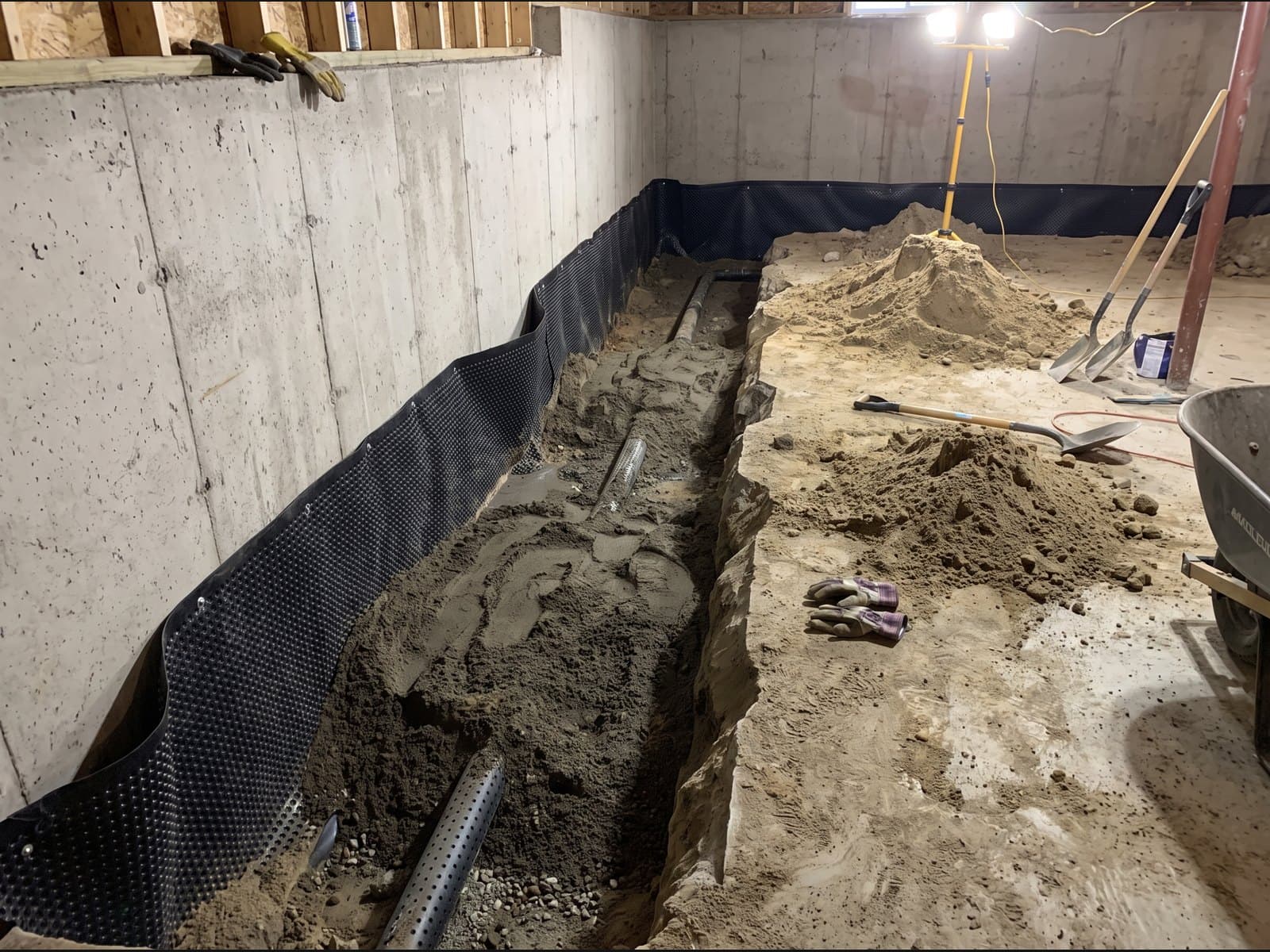
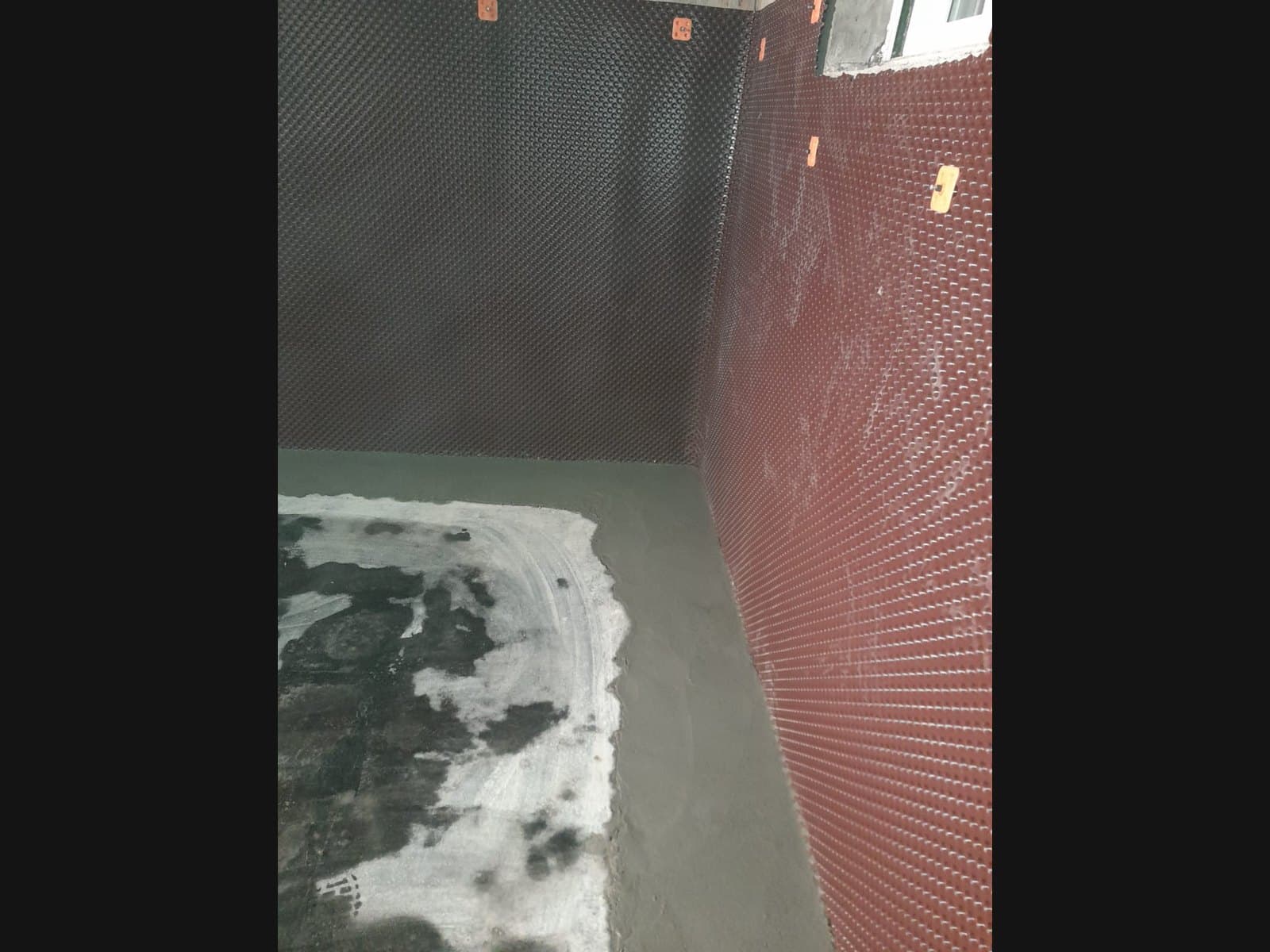
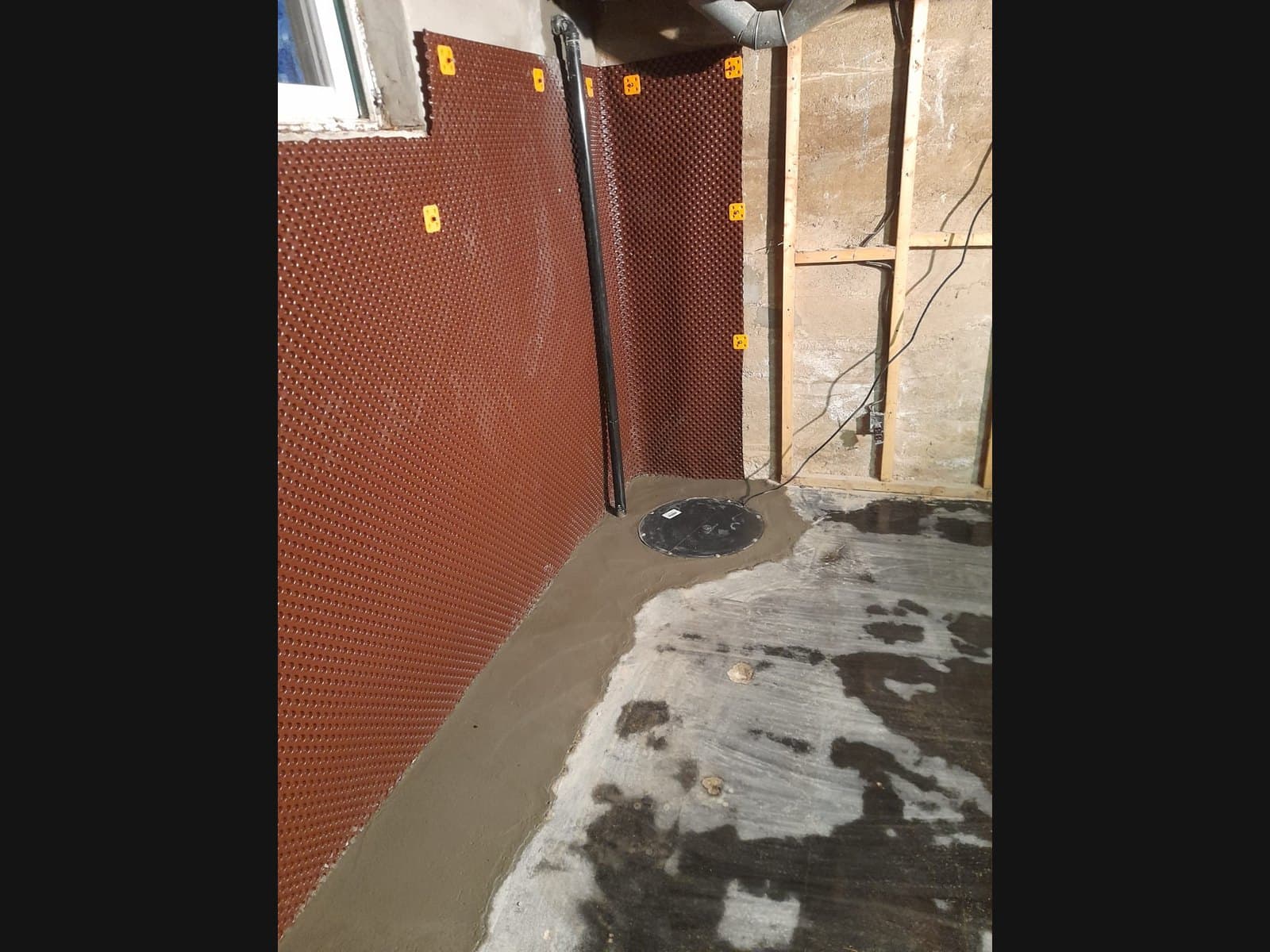
If water shows at the cove joint and you would like the yard left alone, we open the floor along the wall, set a drain, line the face and pump the water out. Typical Wasaga interior work takes one to two days.
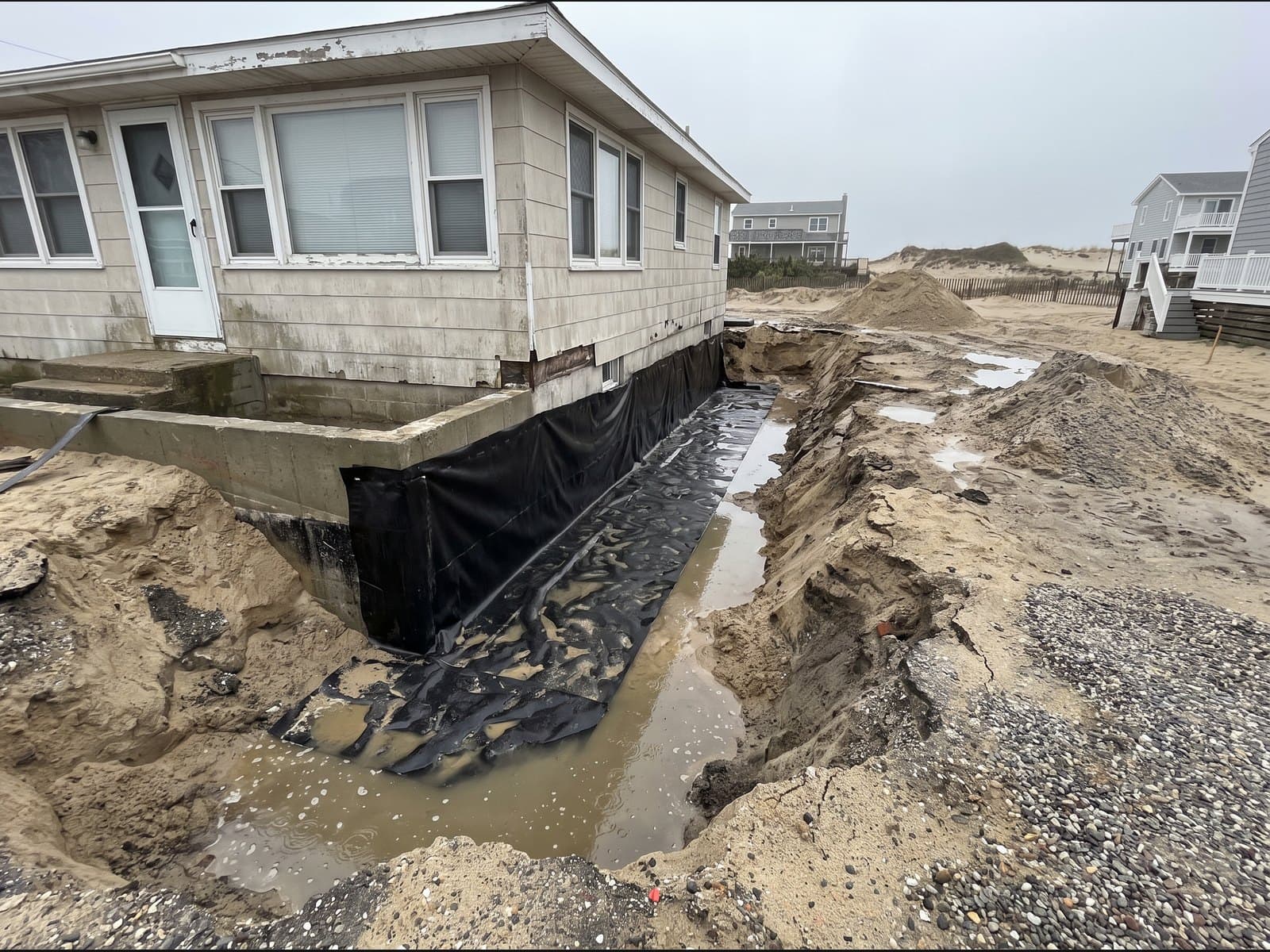
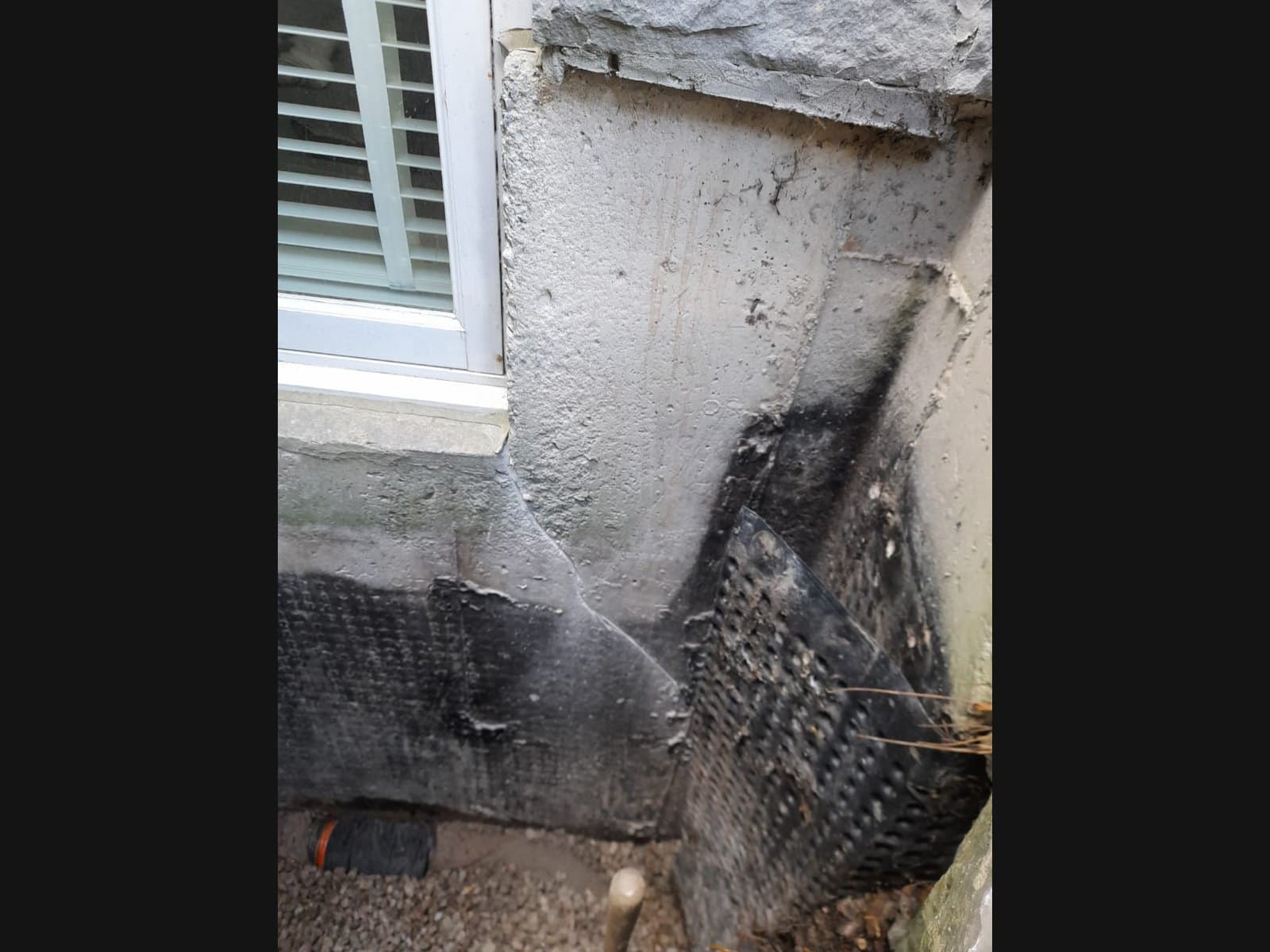
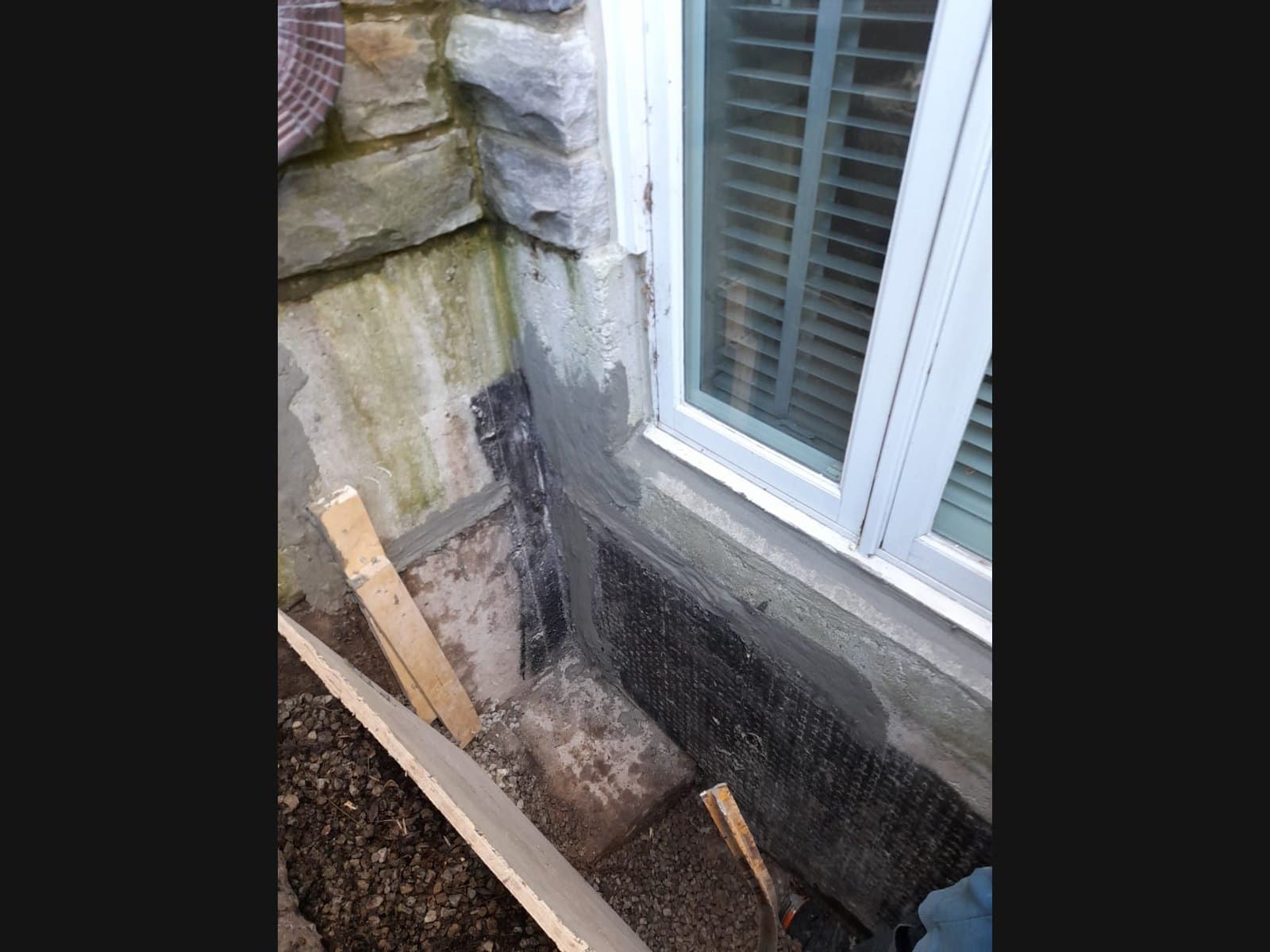
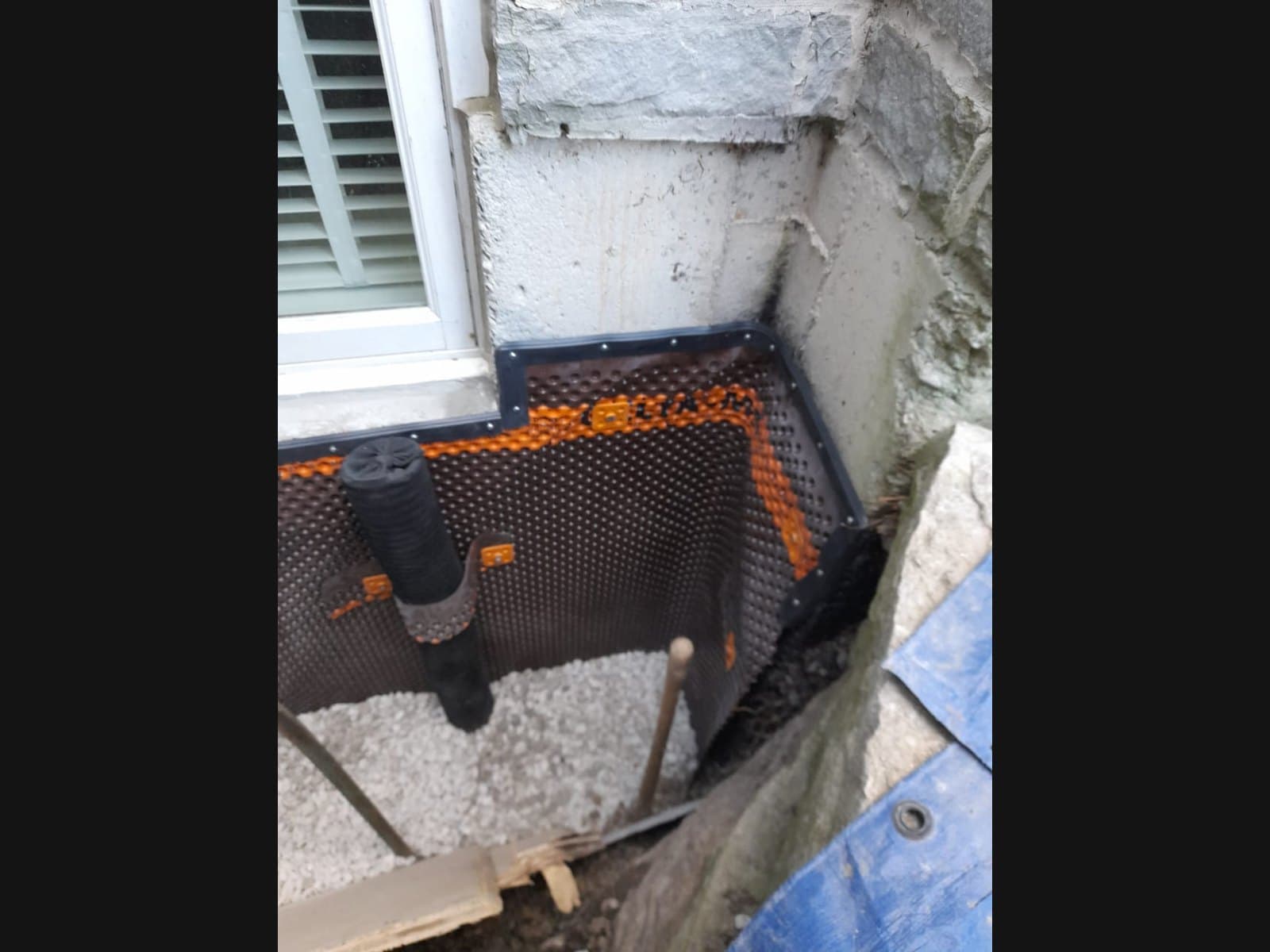
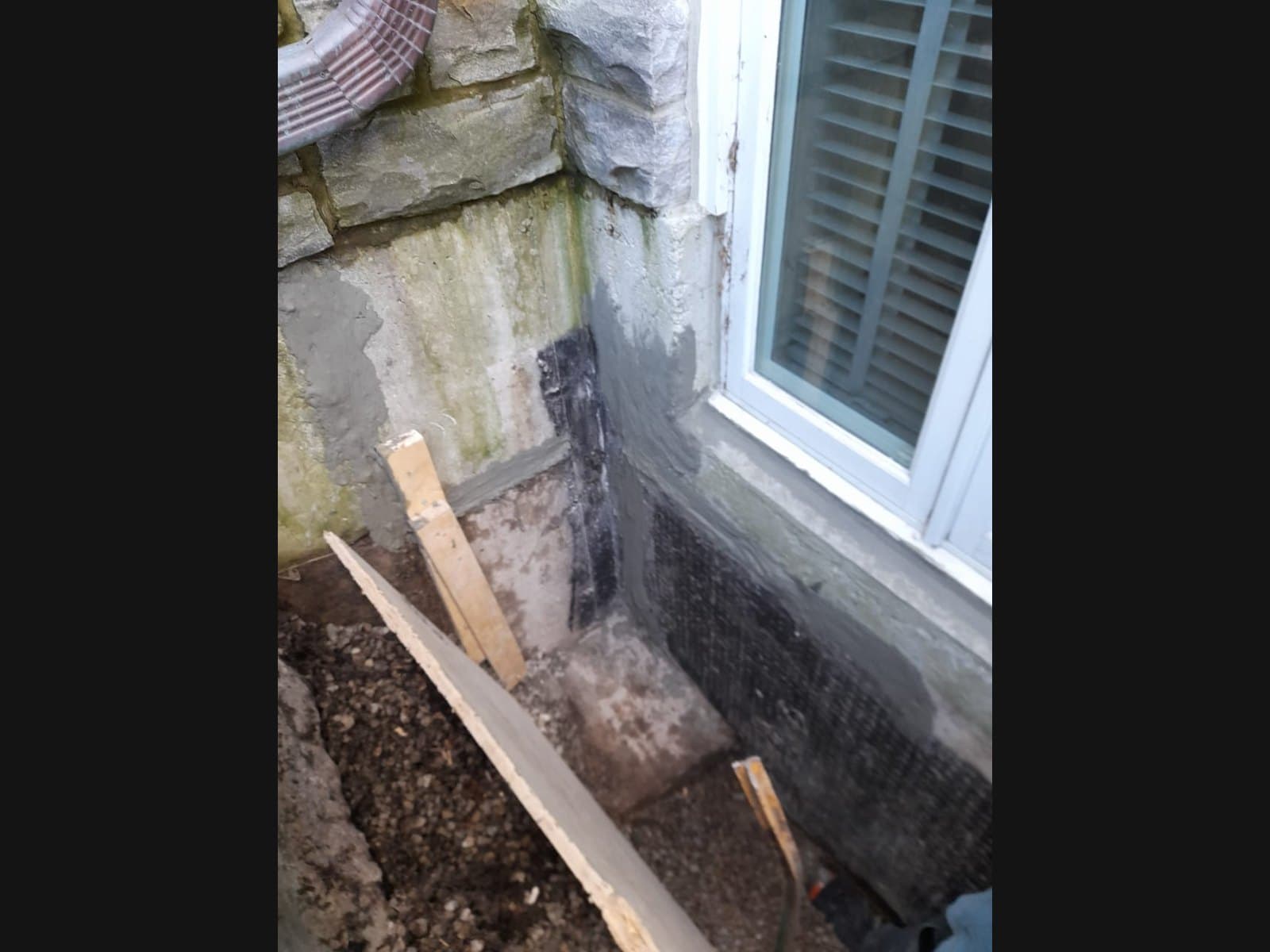
If the wall face is wet or the original membrane has failed, we excavate to the footing, repair cracks, wrap the wall and replace the tile. It costs more because excavation is part of the work, and it is designed for lasting results.
We are a local waterproofing team serving Georgian Bay beach homes and nearby inland towns. We recommend the system that stops your leak, and the photos on this site are from jobs in this market so you can see the kind of work we do.
01
We Find the Entry Point First
A wet wall can be a crack, silted tile in sand, a window well or a pump that cannot keep up. The right repair follows the diagnosis.
02
Georgian Bay Sand and Snowmelt
A high water table, beach sand and Stayner clay pockets are why homes here leak differently than Shield lots or inland subdivisions. We plan the work for those conditions.
03
A Clear Scope Before We Start
You get a written description of the walls we will work, the materials, and what you should expect in the yard or the basement.
04
We Clean Up After the Work
Interior dust is contained. Exterior backfill is compacted. The job is finished when you can use the space again, not only when the membrane is on.
PROCESS
How Our Waterproofing Process Works
01
Inspect
We walk the basement, check the grade, look at the pump and see how the sand or clay drains.
02
Quote
You get a written scope — interior, exterior, crack work, or a combination — with a number attached.
03
Install
Drains, membranes, pumps or excavation. We protect finished areas and keep you posted on timing.
04
Walk-through
We show you how the system works, what to watch on the pump, and how to reach us if something changes.
FOUNDATION WORK
Membranes, Tile and Pumps
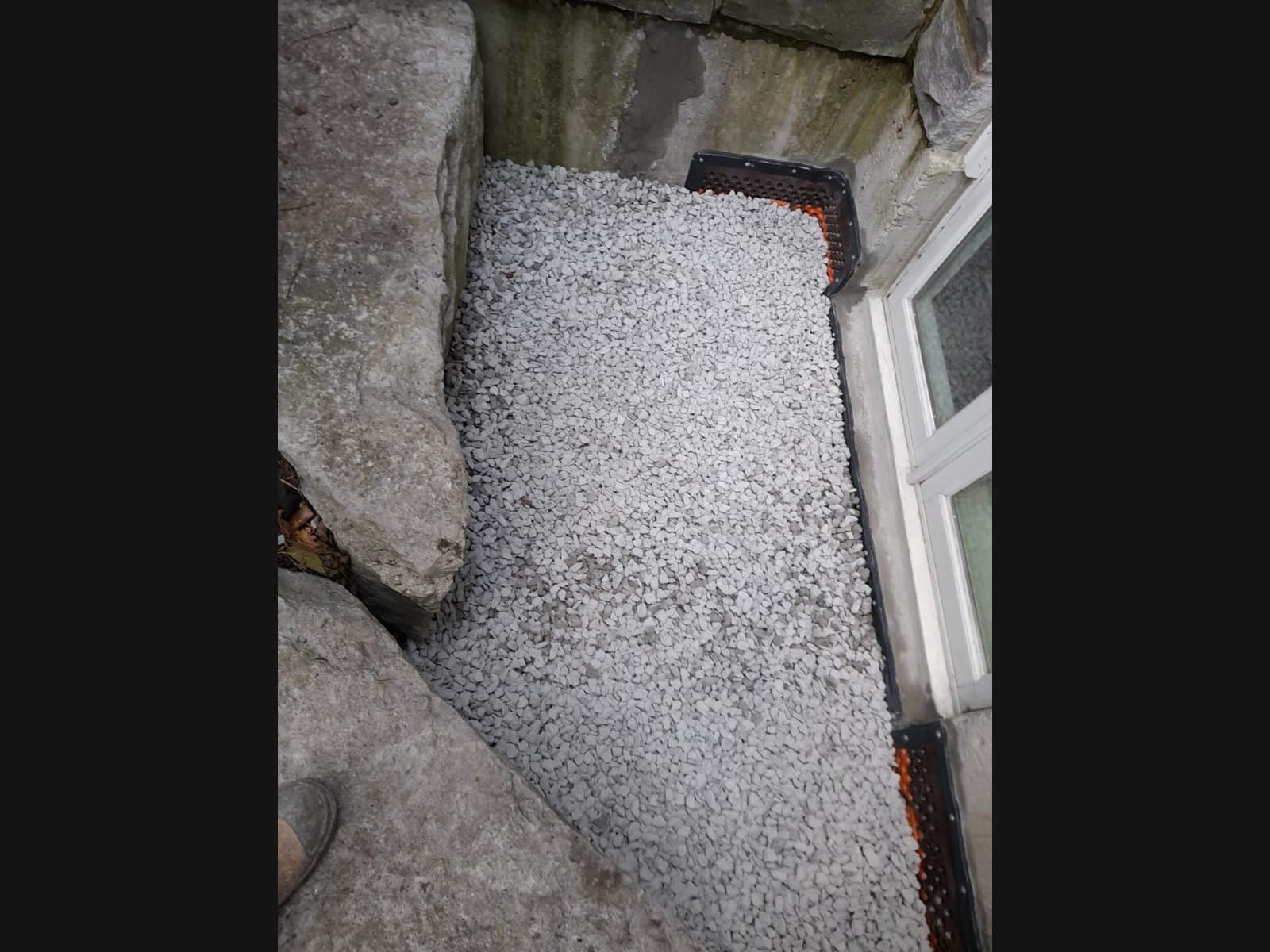
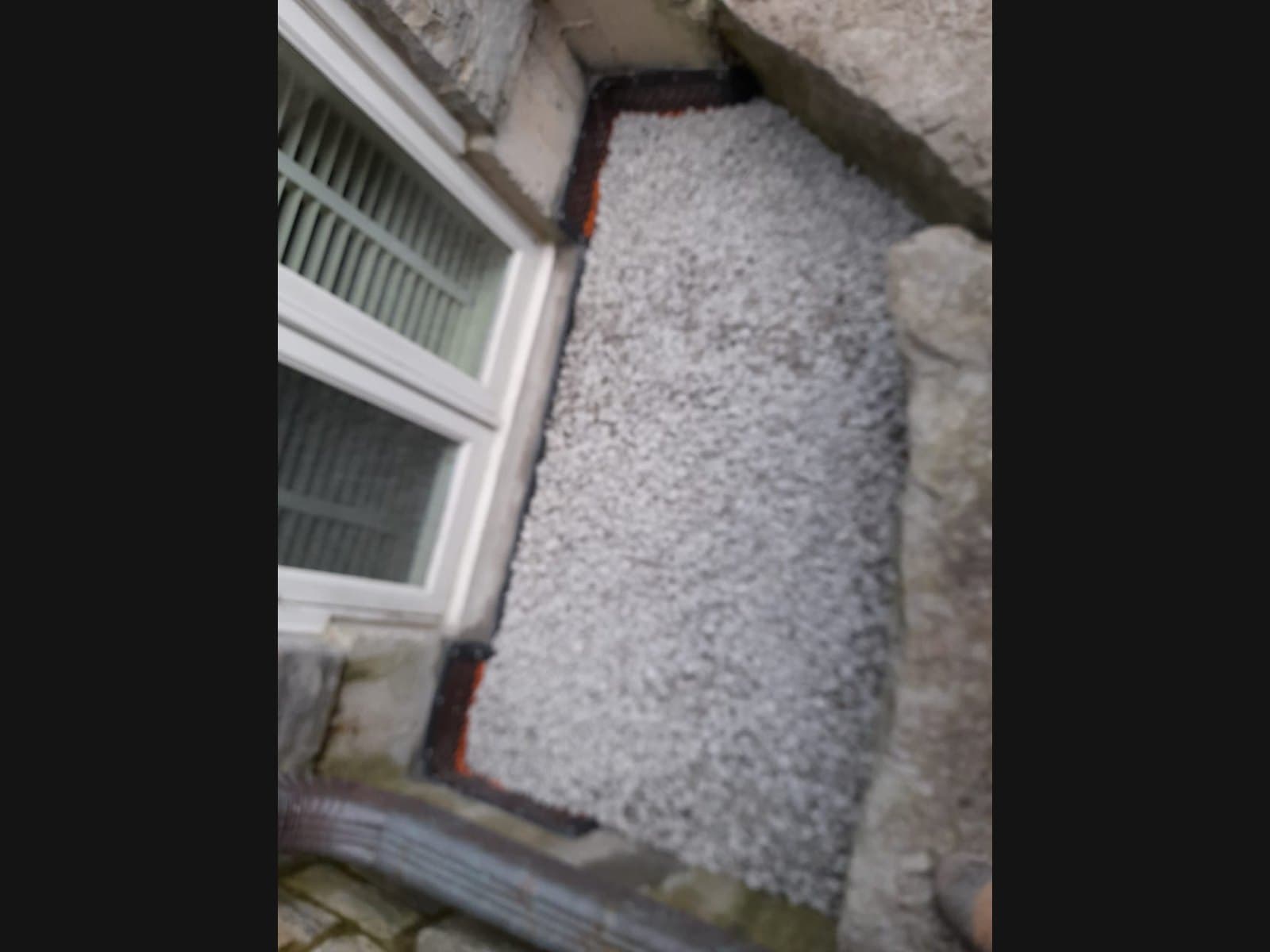
Waterproofing is excavation, drainage stone, filter fabric and a discharge that actually leaves the property. That is the work we document on every job.
PROJECTS
Jobsite Photos from Wasaga Beach
Interior drains, exterior membranes and weeping tile — photographed on Wasaga-area jobs.
“Sand stayed wet against the back wall every March. They opened the floor, put in a drain and a pump that actually leaves the lot. The next snowmelt stayed dry.”
“Our Stayner side yard sat on clay and held every thaw. They excavated the wet elevation, wrapped the wall and replaced the tile. The trench was deep, and they put the yard back carefully.”
“The old pump could not keep up when Georgian Bay weather sat wet for two days. They set a new pit, a backup, and a longer discharge. No standing water at the stairs.”
WASAGA BEACH
Built for Georgian Bay Snowmelt and a High Water Table
Wasaga Beach takes a real winter: deep frost, a concentrated snowmelt and sand that holds a high water table against the foundation. Seasonal places and year-round homes leak when tile silts or a tired pump cannot move water far enough away.
We work Wasaga Beach, Stayner, Collingwood, Elmvale, Tiny and Clearview. If the basement is damp after thaw, that is usually a drainage problem we can inspect and quote.
How much does basement waterproofing cost in Wasaga Beach?+–
Interior work here often lands between $80 and $180 per linear foot. Exterior excavation is often $100 to $250 or more. We quote after we see the wall, the sand or clay, and how the lot drains.
Why do beach basements leak even on newer homes?+–
Wasaga Beach sits on sand with a high water table. Snowmelt and Georgian Bay groundwater find the cove joint or silted tile. A new house can still leak if the pump or grade cannot move water far enough away.
Can you waterproof a seasonal beach place?+–
Yes. Many places sit empty through winter, then wet when you open in spring. We inspect the lower level, then recommend a drain, a crack repair, or a pump you can check before closing up.
Should I waterproof from the inside or the outside?+–
Interior drainage is often the practical choice when sand, a deck or a tight beach lot blocks a trench. Exterior work fits when the wall face is wet and we can reach the footing. The visit tells us which path fits your home.
Do Stayner homes leak for the same reason as the beach?+–
Not always. Stayner has clay pockets that hold melt against the wall. The beach is more about sand and a high table. We look at your soil and the entry point before we recommend a system.
Will waterproof paint keep a Wasaga basement dry?+–
No. Paint does not relieve pressure from snowmelt and groundwater. The water still has to go somewhere. We stop the path first, then you can finish the wall.
What is the best time of year to waterproof here?+–
Interior work can start in any month, including winter. Exterior digging is cleaner once the ground has thawed. If the basement is leaking now, it is better not to wait for a preferred weekend.
Is there a Wasaga Beach waterproofing grant?+–
There is no local municipal waterproofing grant. Other cities’ flood subsidies do not apply to a Wasaga Beach, Stayner or Collingwood address. If a program appears later, we can help with invoices and photos.
How long does a system last?+–
A properly installed interior drain and sump should last the life of the home with regular pump care. Exterior membranes last for decades if backfill and grade stay sound. We explain what to check before we leave.
What do you put in writing before you start?+–
Which walls we will work, the method, the materials, and what to expect in the basement or the yard. The quote follows the inspection. If a crack repair will do, the scope says that.
FREE INSPECTION
Get in Touch for a Free Estimate
Tell us where the water shows up. We will inspect the foundation, explain the options, and quote the work in writing so you can decide with confidence.
01
Inspect
We find the entry point on site.
02
Options
Interior, exterior, or a repair.
03
Quote
Written price after we see the leak.
What to have ready
Street, where the water shows, and whether the basement is finished.
What the visit is
30–45 minutes on site. No charge to inspect the foundation.